Fall Leaf Removal Without Lawn Damage: How Pros Keep Your Turf Healthy
· 5 min read
When fall color hits the Cape, leaves look great on trees and terrible on turf. Left in place, they smother grass, trap moisture, invite mold, and create bare spots that linger into spring. The goal is fast, thorough removal without rutting the lawn, tearing up edges, or compacting soil. Here is how a professional crew gets it done and why it saves you time, money, and your lawn’s health.
Why leaves are hard on Cape Cod lawns
- Smothering: A matted layer blocks light and air, which weakens cool season grasses common on the Cape.
- Moisture and mold: Damp, compacted leaves trap humidity at the soil line. Snow mold and other fungi thrive in this environment.
- Pests and thatch: Decomposing leaves can shelter insects and add to thatch buildup.
- Spring setbacks: Lawns that winter under leaf mats green up slowly and often need overseeding.
The problem with DIY leaf removal
Raking and bagging in small piles sounds simple, but it often leads to damage that shows up later.
- Heavy bag ruts: Dragging or parking heavy leaf bags on turf compresses wet soil and leaves dents that fill with water.
- Overfilled tarps: Large, heavy tarps can shear grass crowns and scrape bed edges.
- Wet leaf smearing: Pushing wet leaves across the yard can smear a slick film that blocks air and light.
- Uneven removal: Missed pockets around shrubs and fences become soggy mats that invite mold.
How pros remove leaves without wrecking the lawn
1) Use the right equipment for the conditions
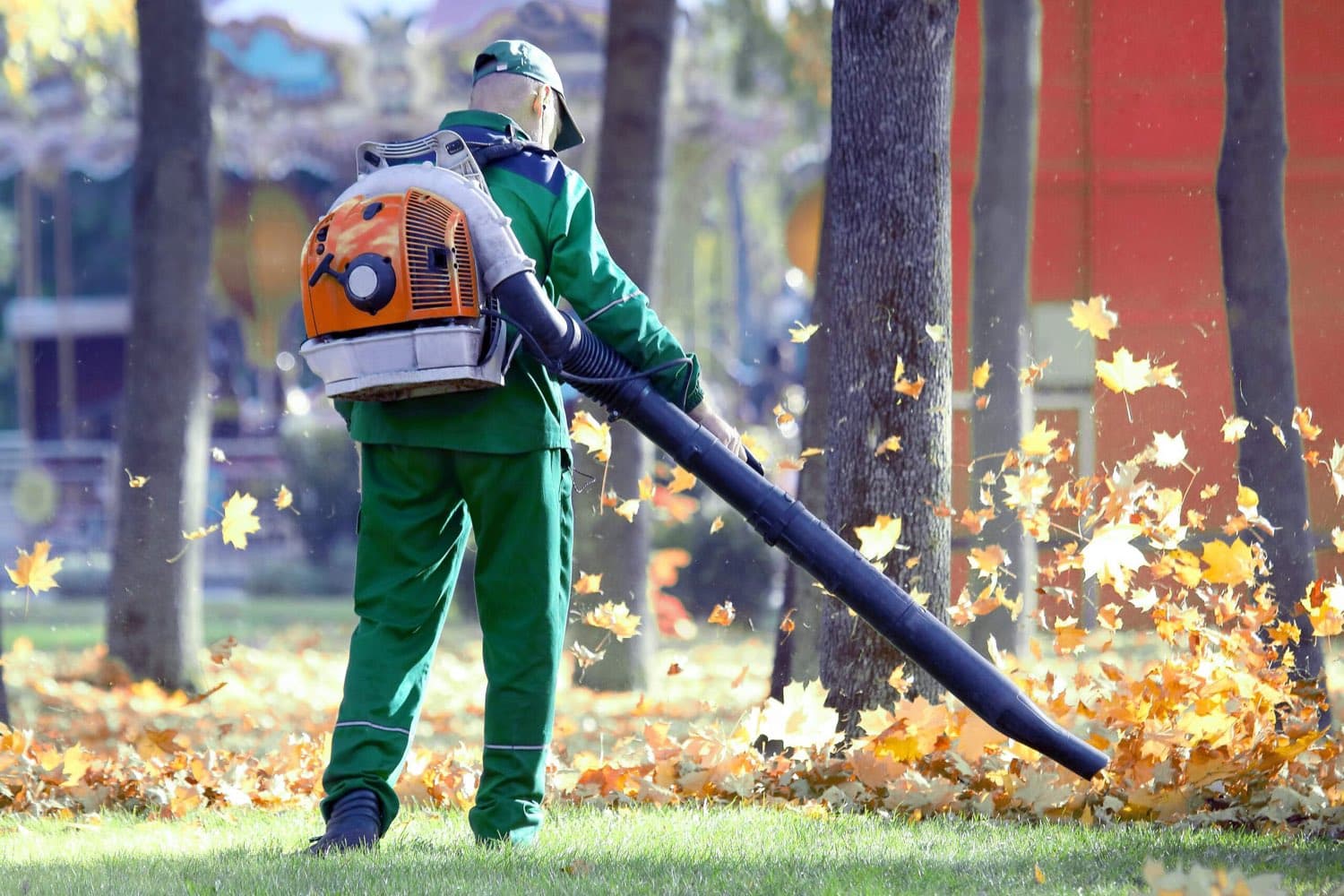
- Backpack blowers move leaves gently across turf, not through it. Airflow is directed to float leaves on top rather than grind them into the grass.
- Walk-behind or truck-mounted vacuums lift leaves without dragging across the lawn. Vacuum tubes collect instead of compressing.
- Low ground pressure carts and mowers carry debris without crushing wet soils. Wide tires and light footprints matter after rain.
2) Work in stages, not once
A single marathon cleanup often follows a storm when soils are soft. Crews schedule staged cleanups to keep lawns clear as trees drop. This avoids soggy-soil rutting and reduces mold risk.
3) Move leaves over turf, not through it
Pros blow leaves along safe lanes that avoid soft spots, sprinkler heads, and new seed. On delicate areas they switch to rakes for a light lift rather than a grind.
4) Keep piles off the grass
Staging piles on hard surfaces or on permeable driveway edges prevents weight dents in the lawn. If a pile must sit briefly on turf, the crew forms several small windrows that get lifted immediately into the vacuum, not a single heavy heap.
5) Protect bed edges and walkways
Edges get nicked when tarps snag or rakes pry too hard. Crews clear edges first with low airflow passes, then finish by hand. This keeps crisp lines and prevents mulch displacement.
6) Adjust for wet leaves
Wet leaves resist airflow and can smear across turf. Pros reduce blower angle, open the throttle in pulses, and shorten push distances. In very wet pockets they vacuum or hand lift instead of forcing movement.
7) Finish with a light groom
After removal, a quick high-deck mow or a crosshatch blower pass lifts the grass canopy so it dries evenly, which cuts disease risk.
Why professional service is the safer, cheaper choice
- No equipment to store or fuel
- Faster completion in narrow weather windows common on the coast
- Lower risk of ruts and compaction thanks to light-footprint equipment
- Cleaner beds and hardscapes with less chance of scuffs and mulch displacement
- Eyes on the lawn to spot fungus, grub activity, or drainage issues before winter
Timing tips for Cape Cod
- Start early: Begin when 25 to 30 percent of the canopy has dropped. Waiting for “last leaf” usually means wet soils and damage.
- Plan two to three visits: Staggered cleanups match different species’ drop times and reduce smothering risk.
- Watch the forecast: Get a cleanup in before a soaking rain or hard frost so leaves are light and soils are firm.
- Wrap with a final polish: Once trees are done, book a last pass that clears late drop and opens the grass canopy.
What happens to the leaves
A professional crew can bag, vacuum into a truck, or stage for town pickup depending on your location rules. Many homeowners choose haul-away and recycling so leaves become compost or mulch instead of sitting on the curb.
Signs your lawn needs help now
- Matted patches that feel spongy
- Gray or white fuzz on leaf mats
- Tracks or dents that hold water
- Yellowing blades under the leaf layer
- Persistent damp shade areas that smell musty
If you see these, schedule a cleanup quickly to reduce disease pressure before winter.
Wrap up
Leaves are beautiful on trees and brutal on turf. The quickest way to protect your lawn is a staged, professional cleanup that lifts, collects, and removes debris without compaction or ruts. With the right equipment, careful routes, and a final turf lift, your grass heads into winter breathing, dry, and ready to green up fast in spring.
If you want the results without the weekend slog, book our fall leaf removal service. We plan visits around your trees, handle disposal, and leave clean edges and clear hardscapes. Get a fast quote today and let a pro crew keep your lawn healthy all season.
FAQs
Do leaf blowers hurt my lawn?
Used correctly, no. The airflow floats leaves over the top of the grass. Damage happens when leaves are forced through wet turf or when heavy piles sit on the lawn.
Can you remove leaves after rain?
Yes, with adjustments. We reduce blower angle, use more vacuum, and avoid heavy equipment in soft areas to prevent ruts.
Is a single end-of-season cleanup enough?
Usually not. Staged visits keep grass breathing all season, prevent mold, and reduce the risk of soil compaction.
What if I recently overseeded?
We protect new seedlings by hand lifting around young areas or by using low airflow to keep seed in place.
Do you haul leaves away?
Yes. We can bag, vacuum to our truck, or stage for municipal pickup depending on what works best for your property.
We do this work every week across Cape Cod. Call us at 774-470-0977 or request a free estimate.